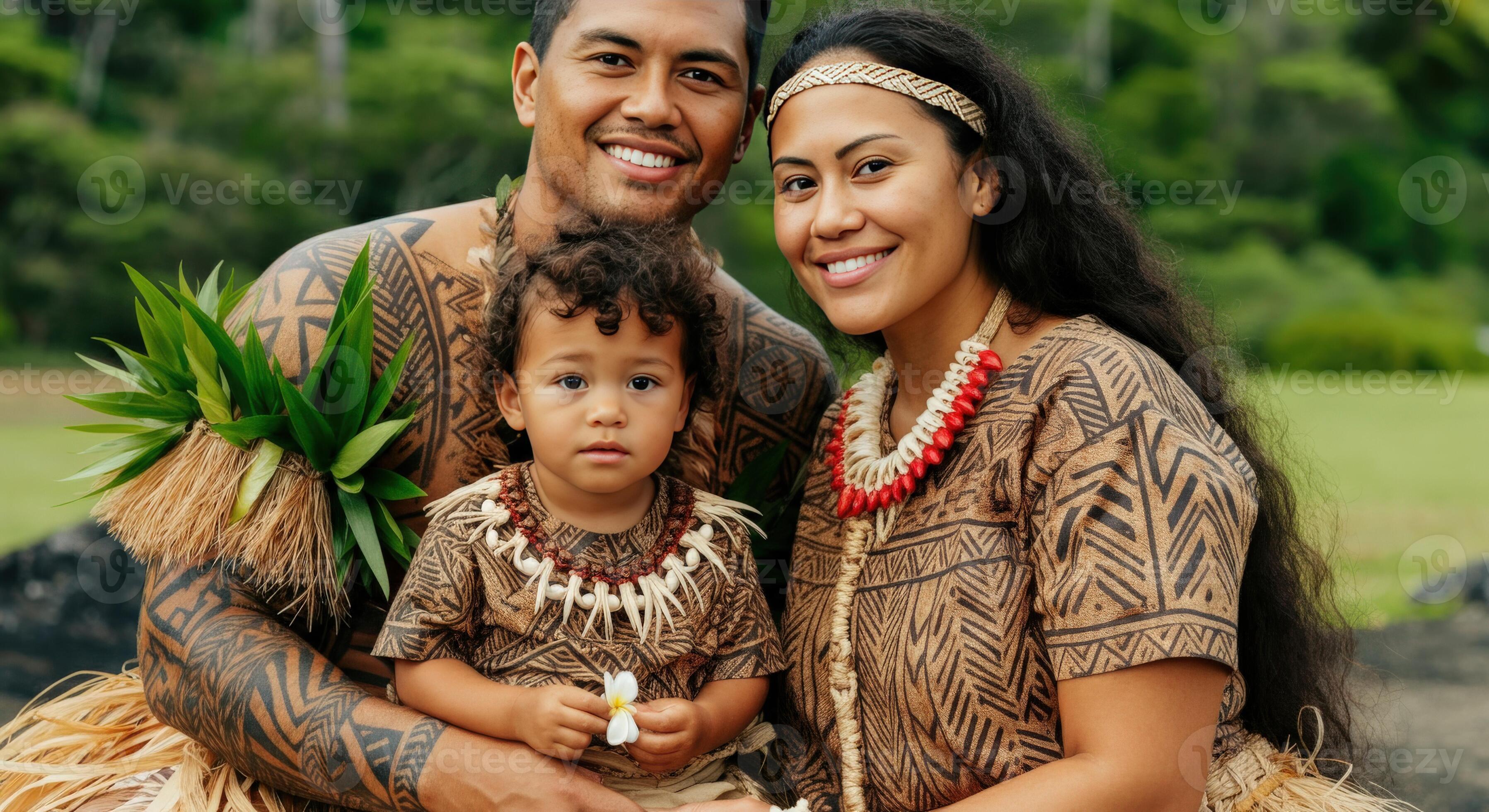
Preserving Cultural Identity in the Age of AI — How TruTones.ai Supports Polynesian and Global Representation
Updated December 03, 2025
AI image generation has exploded over the past two years. Today, it shapes everything from marketing campaigns to social media storytelling, brand identities, game design, and even historical reconstructions. But as AI becomes a global creative tool, a serious problem has emerged:
Many cultures — especially Indigenous and Polynesian communities — are misrepresented, simplified, or erased entirely by mainstream AI models.
This isn’t intentional. It’s a direct reflection of the data these models learn from.
But the consequences are very real.
As AI grows more influential, so does its role in shaping global perceptions of culture. That’s why representing communities accurately, respectfully, and beautifully isn’t optional — it’s essential.
At TruTones.ai, this mission sits at the core of what we’re building.
The Problem: AI Models Struggle With Cultural Authenticity
Most AI image models are trained on massive datasets scraped from the internet. And while these datasets contain millions of images, they’re far from balanced. Some cultures have tens of thousands of visual references…
…and others barely show up at all.
For Polynesian nations — including Samoa, Tonga, Fiji, Tahiti, Niue, the Cook Islands, Māori communities, and many more — this causes several issues:
1. Stereotyping
Models often generate generic “islander” imagery:
coconut trees
beaches
tattoos with incorrect patterns
Hollywood-style “tropical” costumes
This strips away identity and replaces it with cliché.
2. Visual Inaccuracy
Traditional:
clothing
patterns
facial features
hair textures
ceremonial items
ancestral symbols
…are often rendered incorrectly or merged with unrelated cultures.
3. Cultural Erasure
Some models can’t generate Polynesian faces at all without forcing the prompt.
This invisibility is a modern digital form of erasure.
4. Loss of Nuance
Each island nation has its own history, language, colours, symbols, and stories.
AI often lumps them all together, flattening rich diversity into a single aesthetic.
This is the gap TruTones.ai was created to fill.
Representation Matters — Not Just Artistically, but Historically
For many communities, especially Indigenous ones, visual identity is cultural identity.
Tattoos carry generational meaning.
Clothing reflects lineage.
Symbols connect families to ancestors.
Colours define tribes, villages, and traditions.
Hairstyles represent age, role, and heritage.
When AI gets these wrong, it’s more than an artistic error —
it’s a distortion of heritage.
As AI becomes a dominant storytelling tool, accuracy isn’t about “looking nice.”
It’s about respecting people, their families, their communities, and their ancestors.
How TruTones.ai Works to Preserve and Protect Polynesian Identity
From the very beginning, we set out to build models that reflect real people — not Hollywood versions of them.
Here’s how we support better cultural representation, especially for Pacific communities:
1. Curated, Respectful Data Sources
We train our custom models using reference sets that:
are culturally accurate
avoid stereotypes
include real Polynesian features and diversity
represent multiple island nations separately
avoid inappropriate or sacred motifs unless explicitly allowed
This is a crucial difference from mainstream AI.
2. Nation-Specific Representation
We’re not building a generic “Polynesian” model.
We are building distinct, respectful representation for:
Samoan
Tongan
Fijian
Māori
Tahitian
Niuean
Cook Islands
Hawaiian
Kiribati
Tokelau
Tuvalu
And smaller island communities often overlooked entirely
This matters because each nation is unique.
Each deserves its own visual identity preserved.
3. User-Controlled Cultural Elements
Creators can specify:
correct tatau or tatau-inspired patterns
traditional clothing elements
hair and skin tone variations
island-specific aesthetics
family names or village references (optional)
motifs connected to stories, dances, or ceremonies
This gives users the power to tell their own story authentically — without the model defaulting to stereotypes.
4. "Cultural Accuracy Feedback Loop"
If a user from Samoa, Tonga, Fiji, Māori communities (or any culture) sees an output that feels wrong, they can flag it.
This flag goes into our improvement pipeline, where we:
correct the model
retrain on better examples
update cultural patterns
improve facial and body representation
This loop is critical because no AI team — no matter how careful — knows a culture better than the people from that culture.
5. Bringing Visibility to Underrepresented Peoples
Many creators tell us the same story:
“AI doesn’t know what my people look like.”
We’re changing that.
TruTones.ai aims to make every user feel seen:
darker skin tones
broader noses
curly, wavy, or textured islander hair
island-specific jewellery
traditional roles (chiefs, warriors, dancers, healers)
culturally respectful poses and expressions
Representation shouldn’t be something you need to “force” into a prompt.
It should be built into the model by design.
AI Can Be a Tool for Cultural Preservation
This is the part we’re most excited about.
AI isn’t just about generating images for fun.
It can preserve identity, especially for younger generations who may be distant from their heritage.
Imagine:
students in Melbourne using TruTones.ai to create accurate images of their ancestral village
a young Tongan designer generating traditional aesthetics for a clothing brand
Samoan kids seeing AI images that actually look like them
Māori artists preserving patterns and facial markings through modern tools
small island groups finally having representation online
This is cultural resilience — powered by technology.
Why We Care So Much
Because culture matters.
Because representation matters.
Because identity shouldn’t be filtered through Western datasets.
Because people deserve to see themselves as they are, not as the internet misrepresents them.
TruTones.ai isn’t perfect yet.
But we’re building something that AI desperately needs:
A platform where every culture — large or small — is treated with accuracy, care, and respect.
That includes the beautiful, diverse, and powerful cultures across the Polynesian world.
This Is Only the Beginning
Our mission is long-term:
more culturally accurate models
deeper collaboration with communities
better training pipelines
nation-specific sub-models
tools to help users share their cultural stories with the world
Polynesian representation is a core part of that journey.
If AI is going to shape the future of creativity, then it must include everyone — especially cultures that have historically been left out of the digital world.
We’re here to make sure those voices, faces, and traditions are preserved, celebrated, and never forgotten.
TruTones Editorial
Empowering authentic AI art for all